

Running is one of the simplest ways to get fit - but deciding where to run can make a big difference. Whether you’re pounding the pavement outside or hitting the treadmill indoors, each option comes with its own set of benefits and challenges.
It’s not just about putting one foot in front of the other. The surface you run on, the environment around you, the way you pace yourself - and even the weather - can all affect performance, endurance, and injury risk.
Cold winters, icy sidewalks, or sweltering summer heat might make treadmill running more appealing, while fresh air and varied terrain have their own advantages.
We’ve broken down the key differences between treadmill and outdoor running so you can make the most of your runs, improve your results, and stay motivated no matter where or when you run.
Treadmill vs Outdoor Running: At a Glance
-
Outdoor running boosts mood, energy, and engages stabilising muscles with varied terrain.
-
Hills, trails, and wind resistance increase calorie burn and endurance outdoors.
-
Weather, traffic, and hard surfaces can make outdoor running less safe or harder on joints.
-
Treadmills provide a controlled, low-impact environment for safe, consistent year-round training.
-
Built-in metrics on treadmills allow precise pacing, intervals, and customisable workouts.
-
Combining treadmill and outdoor runs gives both real-world conditioning and structured training benefits.
Benefits of Outdoor Running
Running outdoors offers more than just a change of scenery. From mental health boosts to natural resistance, outdoor running can elevate both your fitness and overall wellbeing.
Fresh Air and Mental Boost
Being outside has a powerful effect on mental health. Natural light and fresh air help lift your mood, reduce stress, and increase energy levels.
Outdoor running also provides a mental break from screens and daily routines, allowing you to focus on your surroundings and clear your mind. Many runners find this sense of freedom and connection to nature deeply motivating, making workouts feel more rewarding and enjoyable - much like the broader benefits of running.
Varied Terrain Strengthens Muscles
One of the biggest advantages of running outdoors is the variety in terrain. Hills, uneven trails, and grass surfaces require your muscles to work differently than they would on a treadmill, engaging stabilising muscles and improving balance. This variation:
-
Builds stronger legs and core
-
Helps prevent training plateaus
-
Challenges your body in new ways every run
This type of training complements strength and injury prevention approaches like cross-training for runners.
Higher Calorie Burn
The unpredictable elements of outdoor running, such as wind resistance and varied inclines, often increase the energy your body uses during a workout.
This means you can burn more calories by mixing up your terrain than you might on a treadmill, even at a similar distance or pace. Hills, trails, and other obstacles also provide a form of resistance training that works multiple muscle groups simultaneously.

Drawbacks of Outdoor Running
While outdoor running offers fresh air, variety, and a mental boost, it also comes with a few challenges that can impact consistency, comfort, and safety. Here are some key drawbacks to consider:
Weather and Environmental Factors
One of the biggest downsides of outdoor running is that it’s entirely at the mercy of the weather. Rain, snow, and extreme heat can make your run uncomfortable - or even unsafe.
In winter, icy paths increase the risk of slipping, while summer heat can lead to dehydration or fatigue. Unlike a treadmill session, you can’t easily adjust the “environment” outside.
Safety Concerns
Running outdoors can expose you to a range of safety risks, especially if you train early in the morning or after dark.
Common issues include:
-
Low visibility: Poorly lit paths make it harder for drivers or cyclists to see you.
-
Traffic hazards: Busy roads, crossings, and distracted drivers can disrupt your run or cause accidents.
-
Personal safety: Some runners may feel uneasy in isolated areas or unfamiliar neighbourhoods.
Wearing reflective clothing, running with a friend, or choosing safer routes can help, but these concerns can still limit flexibility - especially in urban environments.
Higher Impact on Joints
Treadmills are designed with shock absorption, but the same can’t be said for concrete and asphalt. Repeated pounding on hard surfaces puts extra stress on knees, hips, and ankles - especially for new or heavier runners.
Trail running is easier on joints, but it introduces uneven ground and obstacles, which increases the chance of twisting an ankle or falling. If you’re prone to joint pain, alternating between treadmill and outdoor sessions might be the best solution.
Inconsistent Terrain and Distractions
Outdoor routes rarely stay the same. You’ll encounter hills, curbs, potholes, and even pedestrians - all of which can interrupt your rhythm and make it harder to maintain consistent pacing.
This inconsistency can actually build strength and stability, but it’s less ideal for structured workouts like speed intervals or tempo runs. Plus, stoplights, traffic, and crowded parks can break your focus and affect training quality.
Limited Data Control
While GPS watches and apps have made outdoor data tracking easier, it’s still less precise than a treadmill’s built-in metrics.
-
GPS signals can drop or drift, affecting pace accuracy.
-
You can’t manually control incline, temperature, or running conditions.
-
External factors (wind, terrain) make it harder to compare runs consistently.
For runners who like structured, data-driven workouts, this lack of control can be frustrating.
Benefits of Treadmill Running
Treadmill running offers a reliable, controlled, and convenient way to train, especially when weather, safety, or time constraints make outdoor running less practical.
It allows you to focus on your pace, intensity, and form without worrying about ice, rain, or uneven surfaces.
Controlled Environment
One of the biggest advantages of treadmill running is the ability to control your environment completely. Temperature, humidity, and surface consistency are no longer variables to manage, making it easier to train year-round. This consistency allows you to:
-
Maintain a steady pace without interruptions
-
Adjust speed and incline to match specific training goals
-
Reduce risk of slipping or injury from icy or uneven surfaces
By removing unpredictable outdoor factors, treadmill running helps you focus on performance and efficiency.
Precision Training and Interval Workouts
Treadmills make it easier to track and measure your progress. Built-in displays and metrics allow you to monitor distance, speed, heart rate, and calories burned in real time. This data is especially useful for structured training, such as:
-
Interval workouts for speed and endurance
-
Gradual incline training to simulate hills
-
Precise pacing for long-distance or race preparation
These features help runners train smarter, ensuring each session is productive and aligned with their fitness goals.
Low-Impact and Reduced Injury Risk
Treadmills typically have more forgiving surfaces than concrete or asphalt, which can help reduce impact on joints. This makes treadmill running a great option for:
-
Beginners building up their mileage
-
Those recovering from injury
-
Runners looking to lower stress on knees, hips, or ankles
The cushioned surface helps minimise strain while still delivering an effective cardiovascular workout.
Motivation and Consistency
Running on a treadmill can help maintain motivation and consistency, even when life or weather interferes with outdoor runs. Benefits include:
-
Entertainment integration: Stream videos, listen to music, or follow virtual trails
-
Scheduled workouts: Fit exercise into a predictable routine
-
Progress tracking: Monitor speed, distance, and heart rate to stay motivated
Consistency is key to achieving long-term fitness goals, and treadmills make it easier to stick with a routine.
Safety and Reduced Exposure
Treadmill running reduces environmental risks that can affect outdoor runners:
-
Less exposure to traffic: No need to worry about cars or cyclists
-
Avoid extreme weather: Run in a climate-controlled environment
-
Lower risk of injury from terrain: Cushioned surfaces reduce stress on joints.
These safety benefits make treadmill running a practical choice for both beginners and experienced runners.
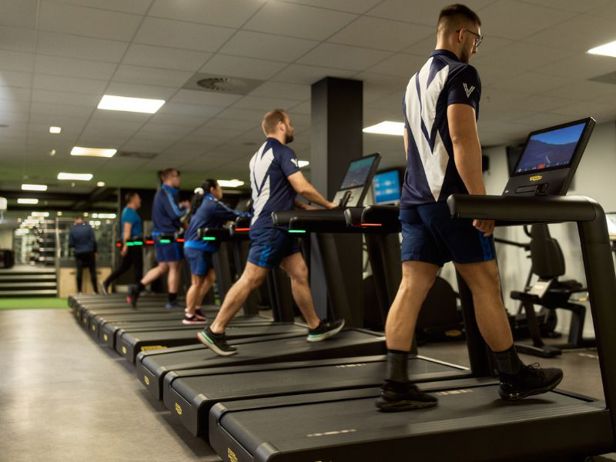
Drawbacks of Treadmill Running
Treadmills are convenient and consistent, but they can’t fully replicate the real-world experience of running outdoors. While they’re great for structured workouts, there are a few downsides worth considering if you rely on them too heavily.
Lack of Variety and Mental Stimulation
One of the most common complaints about treadmill running is that it can feel monotonous. Staring at the same spot for 30 - 60 minutes can make even a good workout feel longer than it is.
Running outdoors naturally provides visual variety - changing scenery, sounds, and terrain that keep your brain engaged. On a treadmill, you have to work harder to stay motivated, which can make longer runs feel mentally draining.
Limited Muscle Engagement
Treadmills provide a consistent, flat surface that reduces the need for balance and stability adjustments. That means your muscles don’t have to work as hard to adapt to changing terrain.
-
Stabilising muscles, especially in your core, ankles, and hips, are less engaged.
-
The moving belt slightly assists leg turnover, making running feel easier than on solid ground.
While that can be good for beginners, it may limit your progress if you never mix in outdoor runs.
Less Effective for Outdoor Racing
If you’re training for an outdoor race, treadmill running might not prepare you as effectively as outdoor sessions.
Real-world factors like wind resistance, uneven surfaces, and changing elevation play a big role in building endurance and adaptability.
Artificial Conditions
A treadmill offers a perfectly controlled environment—which is both its biggest strength and one of its main weaknesses.
-
You miss out on adapting to weather, wind, and varied terrain.
-
Runs can feel less immersive and more mechanical.
-
Even incline adjustments can’t perfectly mimic outdoor gradients or terrain changes.
This can make treadmill running feel less “authentic” and, for some, less enjoyable over time.
Treadmill or Outdoor Running: Which is Better?
Neither treadmill or outdoor running is definitely better; if your goal is maximum calorie burn and real-world conditioning, outdoor running is generally more effective.
If your goal is controlled, consistent workouts or injury-friendly training, the treadmill is an excellent choice. Combining both can give you the best of both worlds.
Ready to Go the Distance?
Joining a Village Health & Wellness Run Club isn’t just about tracking your miles — it’s about preparing for your best race yet.
Whether you’re hitting the trails, running on the road, or doing interval workouts, being part of a supportive community helps you focus not only on training but also on fueling your body the right way before your half marathon.
Our experienced coaches and friendly members provide guidance on pre-run nutrition, helping you understand what to eat for optimal energy, endurance, and performance. Beginners can also explore our run club tips and guidance blog for support.
Sign up for a Village Gym membership to enjoy personalised training, group runs, and a community that supports you every step on your half marathon journey.