
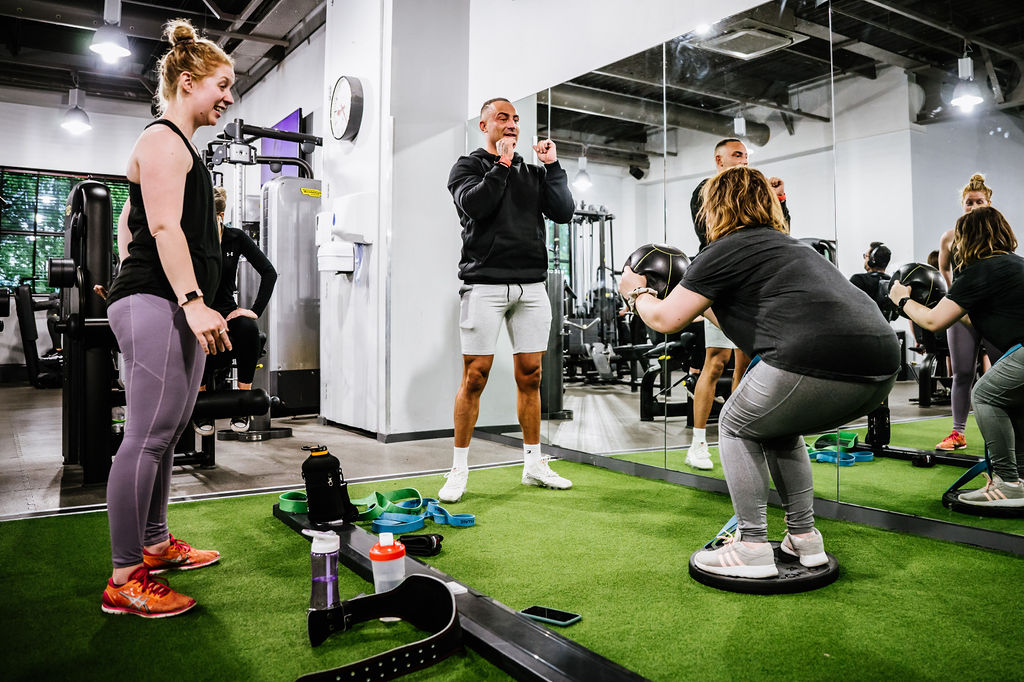
Low-Impact Strength and Resistance Training for Over 50s
Turning 50 doesn’t mean it’s time to step away from the weights.
In fact, strength training can become more important as you get older. And while the idea of lifting weights might sound like the opposite of a low-impact workout, it doesn’t have to be.
Low-impact exercise for over 50s isn’t about taking things easy or avoiding a challenge. It’s about choosing movements that minimise unnecessary jarring and impact on your joints, while still giving your muscles a reason to work.
The key? Build up sensibly, focus on good technique and remember that you’re probably stronger than you think.
What counts as low-impact exercise?
First things first: what actually makes exercise low impact?
Low-impact exercise generally means keeping at least one foot on the ground, or having your body supported by water or equipment, rather than repeatedly jumping, landing or putting heavy impact through your joints.
It’s important to remember that low impact and low intensity aren’t the same thing.
Low impact describes the amount of jarring or mechanical stress placed on your joints. Low intensity describes how hard the exercise feels.
So, yes, you can have a workout that is high intensity but still low impact.
Think about swimming or Aqua Aerobics. Your heart rate can rise, your muscles can work hard and you can finish feeling like you’ve had a proper workout, but the water helps support your body and reduce the impact on your joints.
This is exactly why low-impact strength training deserves a place in your routine.
Why low-impact strength training deserves a place in your routine
There’s a common assumption that lifting weights becomes risky or inappropriate once you reach a certain age.
But strength training itself isn’t the problem. How you train is what matters.
Resistance bands, weight machines, bodyweight exercises and lighter free weights can all be used to create a controlled workout. You don’t need to be lifting the heaviest dumbbells in the gym, rushing through repetitions or attempting complicated movements.
Instead, focus on controlled movements, good technique, a sensible starting weight and gradually increasing the challenge over time.
This is what makes low-impact resistance training such a useful option for fitness over 50.
The goal isn’t to see how much you can lift. It’s to keep your muscles working consistently.
If you’re new to strength training, there’s no reason to figure it all out alone. At Village Gym, our instructors and Personal Trainers can help you understand the equipment, check your technique and create a routine that’s appropriate for your starting point.
Why lifting matters more once you’re over 50
There are good reasons to make strength training part of your routine as you get older.
From around the age of 30, adults naturally begin to lose muscle mass, with NIH guidance estimating a loss of around 3–5% every decade. This can contribute to reductions in strength and mobility as we age.
That doesn’t mean muscle loss is inevitable or that you should be worried about getting older. It simply means there’s even more reason to give your muscles a reason to stay strong.
Bones matter too. UK guidance from the Royal Osteoporosis Society recommends strength exercise on 2–3 days each week, with exercises using increasing resistance helping to support muscle and bone strength.
That could mean using weights, resistance bands, machines or even your own bodyweight.
So while walking and swimming are fantastic low-impact ways to stay active, strength training can give your routine something different: a way to actively challenge and maintain your muscles and support your bones.
And you don’t need to wait until you’re 70 to start.
Strength training as gentle exercise for arthritis and joint pain
If you experience arthritis, knee pain or other joint problems, the idea of picking up weights might understandably make you nervous.
But avoiding movement altogether isn’t necessarily the answer.
The Arthritis Foundation, a US-based organisation, identifies resistance bands, free weights and exercise machines as suitable strength-training options for people managing arthritis. It also recommends adapting exercise during flare-ups, including using isometric exercises where appropriate.
The principle is simple: strengthen the muscles that support your joints without unnecessarily aggravating them.
For example, strengthening the muscles around your knees can help them provide more support during everyday activities such as walking, climbing stairs or getting up from a chair.
That doesn’t mean you should push through joint pain or assume every exercise is suitable for everyone. If you have an existing joint condition, injury or ongoing pain, speak to your GP or physiotherapist before starting a new exercise programme.
Once you’re ready, a Village Gym instructor or Personal Trainer can also help you adapt exercises and equipment to suit your abilities.
And remember, having a bad knee doesn’t automatically mean giving up on exercise. Low-impact exercise for knee pain can still give you a meaningful workout without relying on running or jumping.
How to start a low-impact workout for beginners over 50
Starting something new can feel like the hardest part.
You don’t need to walk into the gym and immediately know how every machine works. You don’t need to lift heavy weights. And you certainly don’t need to have a perfect workout on your first attempt.
You just need to start.
For adults aged 19–64, NHS guidance recommends strength exercises working all the major muscle groups on at least two days a week.
For adults aged 65 and over, the NHS recommends activities that improve or maintain strength, balance and flexibility at least twice a week.
If you’re starting exercise at 50 or beyond, try keeping things simple:
Start with bodyweight exercises. Get comfortable with basic movement patterns before adding resistance.
Try resistance bands. They’re versatile, easy to control and allow you to gradually increase the challenge.
Use the machines. Gym machines can be particularly useful for beginners because they guide your movement and make it easier to focus on technique.
Choose a manageable weight. You should feel your muscles working, but you shouldn’t need to sacrifice your form to complete a repetition.
Build gradually. Once an exercise starts to feel comfortable, you can gradually increase the weight, repetitions or resistance.
Most importantly, don’t be afraid to ask for help.
Village Gym is designed to be more than somewhere you turn up, exercise and leave. Our team is there to help you get comfortable on the gym floor, whether you’re picking up weights for the first time or simply want to refresh your technique.
Building fitness for over 50s beyond the weight rack
Strength training doesn’t have to be your entire fitness routine.
In fact, variety can be one of the best ways to keep exercise enjoyable and sustainable.
Try combining your strength sessions with other forms of low-impact exercise. A session of Tai Chi can help you work on balance, flexibility and controlled movement, while Aqua Aerobics provides a joint-friendly way to get your heart rate up while working against the natural resistance of the water.
You could also add walking, swimming, Pilates or other classes into your week, depending on what you enjoy.
There’s no single perfect workout for over 50s. The best routine is one you enjoy enough to keep doing.
Start strength training at Village Gym
Getting older doesn’t mean getting weaker.
With the right approach, strength training can be a valuable part of your fitness routine at any age. You don’t need to lift heavy, train every day or push yourself to exhaustion.
Start where you are. Learn the movements. Build your confidence. Then gradually build your strength.
You might be stronger than you think.
Whether you’re completely new to exercise or simply looking for a more joint-friendly way to train, the Village Gym team can help you find a starting point that works for you.
Ready to give it a go?
Buy a Village Gym pass or join your local Village Health & Wellness Club and take your first step towards stronger, more confident training.
Frequently Asked Questions
Is strength training safe for someone over 50 who has never lifted weights before?
Yes. Strength training can be a safe and effective form of exercise for beginners over 50 when it’s approached sensibly. Start with bodyweight exercises, resistance bands or light machine weights, focusing on good technique before increasing the load. If you have an existing health condition, injury or ongoing pain, speak to your GP or physiotherapist before starting a new exercise routine.
What is the best low-impact exercise for someone with knee pain or arthritis?
There isn’t one single best exercise for everyone, but activities such as walking, swimming, Aqua Aerobics and controlled resistance exercises can be good low-impact options. Low impact means minimising jarring and jumping, with at least one foot on the ground or your body supported by water or equipment. Resistance bands, machines and supported movements can also help build the muscles around your joints without unnecessary impact. If you have arthritis or an existing knee condition, speak to your GP or physiotherapist for personalised advice.
How often should someone over 50 do strength training?
The NHS recommends that adults aged 19 to 64 do strength exercises that work all the major muscle groups on at least 2 days a week. For adults aged 65 and over, the NHS recommends activities that improve or maintain strength, balance and flexibility at least twice a week. Starting with resistance bands, machines and supported movements can be a good way to build strength before progressing to more challenging exercises.
Does strength training help with weight loss as well as muscle and bone health?
Strength training can form part of a healthy approach to weight management, while also helping you maintain muscle and support bone strength as you age. Building and maintaining muscle is particularly important as muscle mass naturally declines with age. For the best overall results, combine strength training with regular movement and a balanced diet. The NHS recommends strength exercises on at least 2 days a week for adults aged 19 to 64, while older adults should include strength, balance and flexibility activities at least twice a week.