
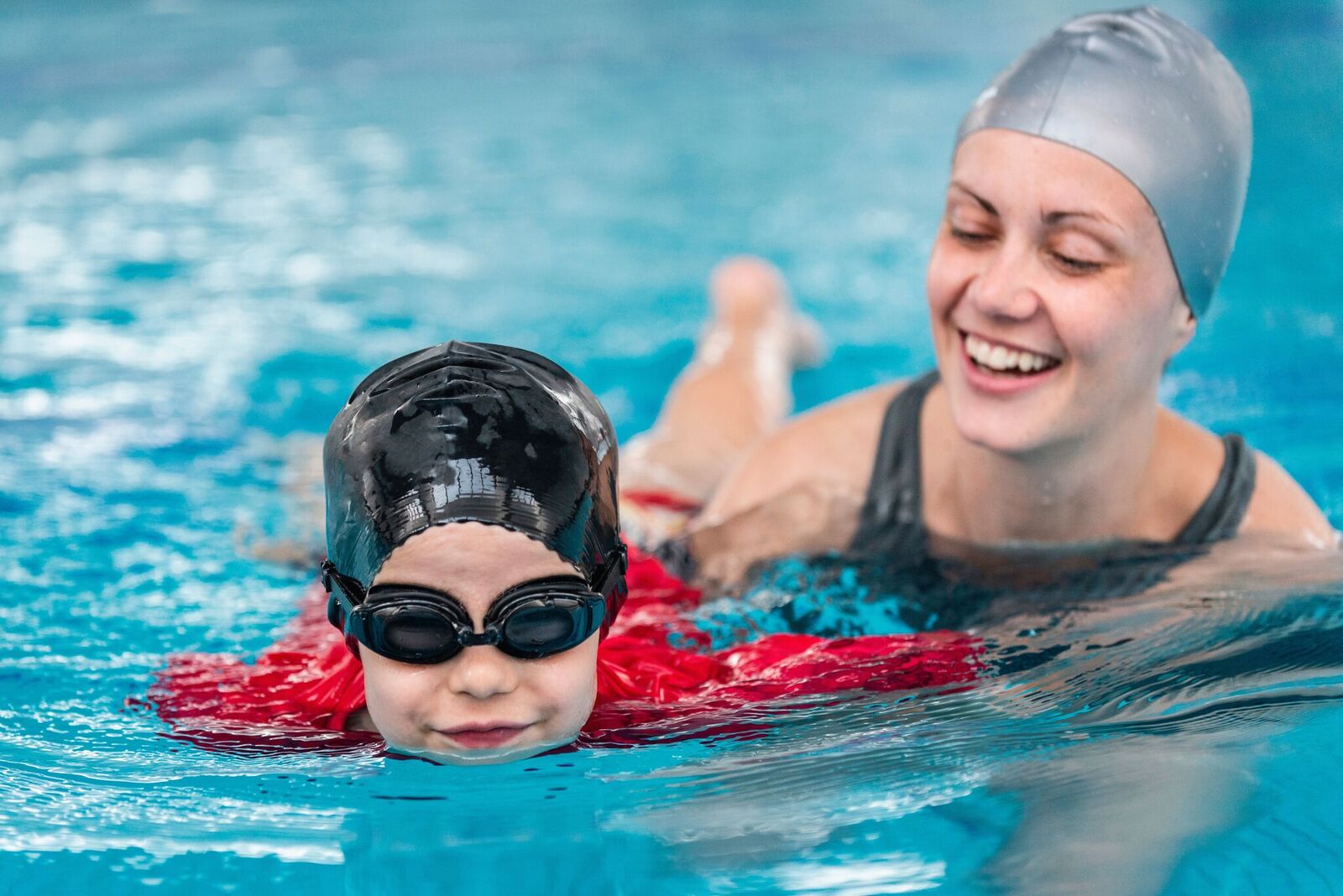
Swimming is more than just a fun way to cool off - it’s a full-body workout that can improve fitness, burn calories, and boost mental well-being.
In this beginner-friendly guide, we’ll break down the essentials and teach you the basic skills every swimmer needs, including the fundamental techniques to get familiar with and common mistakes to avoid.
Whether you’re starting from scratch or looking to refine your technique, this guide will help you make a splash efficiently and safely.
What is the 80/20 Rule in Swimming?
The 80/20 rule in swimming means 80% of your swimming training should be low-intensity and an easy pace and the other 20% should be higher intensity and faster.
This is a simple way to structure swimming training for beginners because it makes sessions manageable and helps build your endurance in a way that’s safe and easy to maintain.
Many people find that using the 80/20 means they’re quick to see progress without burning themselves out or getting injured.
What Are the 5 Basic Swimming Skills?
If you’re going to get into swimming or take it more seriously as a sport, these are the five fundamental swimming skills you will need to be confident with:
|
Skill |
Description |
More Details |
|
Floating |
Staying relaxed and buoyant in the water |
Try floating on your back or front, keeping your body horizontal. Relax your neck and let your body rise naturally. Start with 20–30 seconds, gradually increasing as you feel comfortable. |
|
Breathing |
Learning to exhale underwater and inhale smoothly |
Exhale continuously through your nose or mouth while your face is in the water, then turn your head to inhale quickly. Practice breathing every 2–3 strokes. |
|
Kicking |
Using your legs to propel yourself efficiently |
Keep legs straight but relaxed, flexing ankles slightly. Use steady, rhythmic flutter kicks (for freestyle/backstroke) or frog kicks (for breaststroke). Hold onto a kickboard at first if needed. |
|
Arm movements |
Coordinating strokes to move through the water |
Practice basic strokes like freestyle (alternating arms forward), breaststroke (arms push out then sweep in), backstroke (arms rotate in opposite circles), and butterfly (both arms move together). Focus on smooth, controlled motions. |
|
Body position |
Keeping your body streamlined and horizontal |
Maintain a straight, horizontal line in the water with your head in line with your spine. Keep hips and legs near the surface. Good posture reduces drag and makes swimming more efficient. |
How Long Should a Beginner Swimmer Swim?
For beginners, aim for 20–30 minutes per session, 2–3 times per week.
You may find that 30 minutes absolutely flies by and you want to keep going, but aim for consistency so that you keep going back for more, instead of wearing yourself out and not going again for a while.
How to Swim: Step-by-Step for Beginners
Start simple and focus on technique rather than speed. Here are my top tips for beginners:
|
Step |
What to Do |
Tips / Notes |
Common Mistakes |
|
1. Get comfortable in the water |
Walk around, float, and gently submerge your face |
Spend a few minutes just feeling the water. Relax your body and get used to the sensation |
Tensing up, holding your breath, or panicking |
|
2. Learn proper breathing |
Exhale underwater and inhale when you turn your head |
Practice a slow rhythm - exhale under water, inhale quickly - even while standing in the shallow end |
Lifting your head too high, holding your breath, or gasping |
|
3. Practice kicking |
Hold onto the pool edge or a kickboard and kick steadily |
Keep legs straight but relaxed, toes pointed slightly. Small, controlled kicks are better than big flails |
Bending knees too much, kicking wildly, or tiring too fast |
|
4. Focus on arm movements |
Try basic strokes like freestyle slowly and deliberately |
Focus on smooth, coordinated motions rather than speed. Think “control, not rush” |
Jerky arms, crossing hands in front, losing rhythm |
|
5. Combine skills |
Put it all together - breathing, kicking, and arms - over short distances |
Start with one or two lengths at a relaxed pace. Build confidence before worrying about laps |
Trying too much too soon, forgetting to breathe, or flailing arms/legs |
|
6. Gradually increase distance |
Swim a little further each time as you get stronger |
Add one length at a time. Take breaks when needed and notice your progress |
Overexerting early and losing form |
|
7. Focus on consistency |
Swim regularly, even if sessions are short |
20–30 minutes, 2–3 times a week, is enough to see improvements |
Skipping sessions thinking one long swim replaces regular practice |
Can I Lose Belly Fat by Swimming?
While no exercise will target fat loss in one area, swimming is excellent for burning calories and building muscle which makes it a great exercise for losing fat across your whole body. It will also help with improving your metabolism, which also helps with fat loss.
What Happens if I Swim Every Day for a Month?
Firstly, if you swim every day for a month, make sure to include some more relaxed sessions where you’re not pushing or challenging yourself, to avoid fatigue.
If you have a balanced approach to swimming every day for a month, the type of benefits you should expect to see include:
-
Enhanced cardiovascular fitness and overall energy levels
-
Increased muscle strength and endurance
-
A more resilient and stable core
-
Greater breath control and efficiency in swimming
-
Boosted stamina for longer, more effective workouts
-
Better posture and body alignment
-
Increased flexibility and range of motion
What Swimming Stroke is Best for Weight Loss?
All swimming strokes burn calories, but some burn more than others.
Here’s a handy table to help you decide which ones to focus on:
|
Stroke |
Intensity / Challenge |
Key Muscles Worked |
Notes for Beginners |
Calories Burned (approx. per hour) |
|
Butterfly |
Very high-intensity |
Full body |
Excellent calorie burn but challenging for beginners. Try only short bursts initially. |
600-900 |
|
Freestyle (front crawl) |
Fastest, high calorie burn |
Arms, shoulders, core |
Great for overall fat loss. Start slow, focus on breathing and technique. |
500-700 |
|
Breaststroke |
Moderate, steady |
Chest, arms, legs |
Slower pace, builds endurance, easy to sustain. Perfect for longer sessions. |
400-600 |
|
Backstroke |
Moderate |
Back, shoulders, core |
Gentle on joints, good for posture and strengthening your upper body. |
400-600 |
Swim Your Way to Fitness
Swimming is a great exercise for almost anyone and it’s extremely accessible for beginners. Not only does it help you to get fitter, stronger and to reach your weight goals, it’s a lot of fun!
All of our health clubs have fantastic pools - find your nearest pool to start swimming today.