
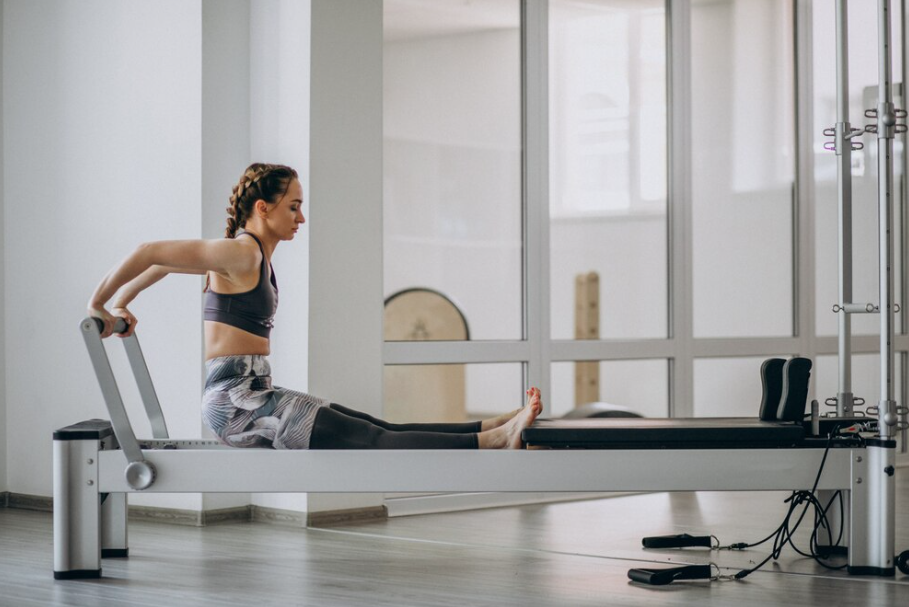
Thinking about trying Reformer Pilates? Whether you’re a seasoned fitness fanatic or just starting your journey, this low-impact, full-body workout offers a host of benefits for people of all ages and fitness levels.
Diana Wright, National Group Fitness Manager, explores how it can transform your strength, mobility, and overall wellbeing, and answers your most frequently asked questions.
Reformer Pilates: At a Glance
-
Reformer Pilates uses a specialised machine with springs, straps, and a moving platform to provide support and adjustable resistance for a full-body workout.
-
Benefits include building strength and muscle, improving posture, flexibility, core stability, and joint health.
-
Unlike Mat Pilates, Reformer Pilates uses machine resistance, offers more exercise variety, adjustable difficulty, and supportive feedback - making it beginner-friendly.
-
Results can be felt within a few weeks, with noticeable improvements in posture, strength, stability, and toning after 8-12 weeks.
-
No shoes are worn; use bare feet or grip socks and comfortable clothing. It’s low-impact, suitable for beginners, and strengthens the core, aiding a toned stomach over time.
What is Reformer Pilates?
Reformer Pilates is a style of Pilates that uses a specialised machine, known as a reformer, to support and challenge your movements.
The reformer has springs, straps and a moving platform to provide both support and resistance. It’s challenging, fun and provides a workout for your whole body.
Benefits of Reformer Pilates
If you’re wondering why people love this low-impact exercise, the benefits of Reformer Pilates include:
- Strengthening Your Core and Stabiliser Muscles: Reformer Pilates targets multiple muscle groups at the same time, particularly focusing on the core. The resistance provided by the springs and pulleys helps build strength & tone muscles.
- Boosting Flexibility and Mobility: The controlled movements and stretches on the reformer bed help increase flexibility and joint mobility, making everyday activities easier and more comfortable.
- Enhances Posture and Alignment: The reformer bed really aids with body alignment and balances muscles accordingly. Reformer Pilates improves posture and helps alleviate tension caused by poor movement patterns and everyday body positioning.
- It's a Low-Impact, Joint-Friendly Workout: The smooth and controlled nature of Reformer Pilates makes it an ideal option for anyone recovering from injury or looking for a workout that’s gentle on the joints and muscles.
- It Boosts Mindfulness: With its focus wellness and mindfulness, using precise body control, Reformer Pilates helps reduce stress, improve concentration, and leave you feeling all zen and refreshed.
- Adaptable for All Fitness Levels: Whether you’re a beginner or an athlete, the reformer bed can be adjusted to suit your individual needs, offering opportunities for progression and challenge.
Reformer Pilates goes beyond a typical workout. It’s a holistic method for strengthening your body, enhancing mobility, and boosting overall well-being.
What is the Difference Between Pilates and Reformer Pilates?
The main difference between Mat Pilates and Reformer Pilates is Mat Pilates uses bodyweight as the main source of resistance while the resistance from Reformer Pilates comes from springs in the reformer machine.
To summarise all of the main differences:
|
Feature |
Mat Pilates |
Reformer Pilates |
|
Core principles |
Control, breathing, posture, core strength |
Control, breathing, posture, core strength |
|
Equipment |
Uses cushioned mat for bodyweight exercises. Small props such as resistance bands and light weights can add challenge |
Reformer machine with springs, straps and carriage |
|
Resistance |
Bodyweight and gravity |
Adjustable spring resistance |
|
Where it’s performed |
On the floor (mat-based) |
On a reformer machine |
|
Level of support |
Less external support |
More support and feedback from the machine |
|
Difficulty adjustment |
Limited |
Easily adapted to be easier or harder |
|
Main focus |
Endurance, control and technique |
Strength, control and full-body conditioning |
|
Exercise variety |
More limited |
Greater variety of exercises |
|
Beginner suitability |
Can feel challenging at first |
Often feels more supportive for beginners |
|
Best for |
Building control and body awareness |
Building strength, confidence and mobility |
Which is Harder, Pilates or Reformer Pilates?
Both can be as hard as you make them. It’s easier to make Reformer Pilates more difficult because you can choose more specific resistance levels using the reformer machine.
However, the machine itself can also make doing Pilates feel more physically supportive because of the straps and the way the machine supports and guides movements.
Is Reformer Pilates Hard for Beginners?
Reformer Pilates is very beginner-friendly as you can really tailor the resistance levels and movements to make it easy to begin with - just make sure you choose a class that’s designed for beginners.
You should expect a beginners Reformer Pilates session to feel challenging but achievable. The main challenge will probably come from using muscles in different ways, or feeling like you’re using muscles you didn’t even know you had! Beginners sessions should help you learn technique, breathing and basic movements.
How Long Does it Take to See Results from a Pilates Reformer?
As long as you are consistent with using a Pilates reformer you should start to feel different within a few weeks and it’s highly likely that after 4-6 weeks you’ll notice you have better posture, strength and stability.
At around 8-12 weeks you’ll start to see the results: it’s likely you’ll look more toned and you’ll be able to move in ways you weren’t able to before (when was the last time you could touch your toes without bending your knees?)
Will Reformer Pilates Flatten My Stomach?
While no exercise targets fat loss in one specific area, Reformer Pilates is excellent for strengthening your core muscles, which can make your stomach look and feel more toned.
Combined with balanced nutrition and plenty of movement, Reformer Pilates can definitely contribute to a flatter stomach over time.
Can I Do Reformer Pilates if I’m Unfit?
You definitely do not need to be ‘fit’ to start Reformer Pilates and it’s a great way to exercise if you’re new to exercising or have had a long break from exercising.
This is because Reformer Pilates is low-impact, physically supportive and can be easily adjusted to suit your levels of strength and mobility.
Do You Wear Shoes for Reformer Pilates?
No, do not wear shoes while doing Reformer Pilates. You’ll need to have bare feet or socks with grip on them, to give you better control while you’re using the reformer machine. It’s also best to wear comfortable, loose clothing that will enable you to move freely.
Elevate Your Workout with Reformer Pilates
Ready to challenge your body in a whole new way? Whether you’re new to Pilates or a seasoned pro, our expert-led Reformer Pilates classes will guide you through every exercise, helping you build strength, stability, and confidence.
Find your local gym and join us at Village Health and Wellness Clubs.